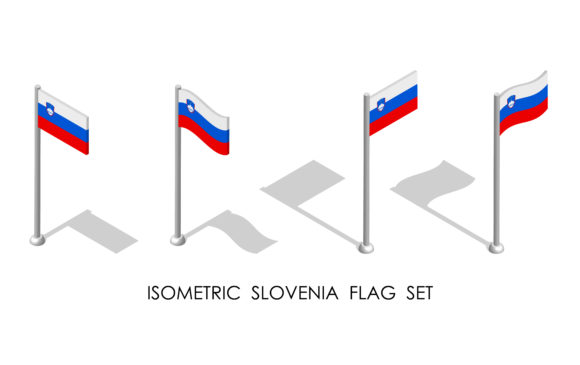
Isometric Flag of Republic of SLOVENIA I: A Dynamic Visual Asset for Modern Design
When you look at the Isometric Flag of Republic of SLOVENIA I, you are seeing more than just a static symbol of national identity. You are looking at a versatile 3D vector asset that transforms flat imagery into a tangible, dimensional experience. Unlike traditional 2D graphics that sit flat on a screen or paper, this isometric representation captures the depth and structure of the flag as if it were a physical object suspended in space. This shift from two dimensions to three adds a layer of realism and engagement that is becoming increasingly essential for designers, marketers, and content creators who need to make their visual communication stand out.
The beauty of this specific asset lies in its duality. It serves perfectly well as a static position element, providing a clean, architectural look that fits seamlessly into infographics, technical diagrams, or minimalist website headers. However, its true potential shines when utilized in motion. When animated on a flagpole, the isometric flag of Republic of Slovenia comes alive, responding to simulated wind currents with natural fluidity. This dynamic quality bridges the gap between digital abstraction and real-world observation, making it an incredibly powerful tool for storytelling and brand presentation.
Real-World Applications Across Industries
Why would a modern professional choose an isometric 3D vector over a standard JPEG? The answer often comes down to context and the specific problem they are trying to solve. In the world of web design and user interface (UI) development, the demand for unique, non-generic visuals is higher than ever. Standard stock photos can feel overused and impersonal. By integrating the Isometric Flag of Republic of SLOVENIA I into a landing page for a Slovenian tech startup or a tourism portal, designers create an immediate sense of place without relying on cliché photography of mountains or castles.
Consider the logistics and shipping industry. Companies that handle international freight often need to visualize routes, distribution networks, or country-specific services. An isometric view of flags allows these businesses to represent countries within a 3D map environment. Instead of a flat pin dropping on a map, a small, detailed isometric flag can mark a destination. This adds a professional polish to dashboards and tracking systems, making complex data easier to digest for clients. The static position version is particularly useful here, acting as a reliable icon that maintains clarity even at smaller sizes.
Moving into the realm of education and e-learning, the utility of this asset expands further. Imagine an interactive module teaching European geography or history. Students can interact with 3D models of different nations. Clicking on the isometric flag of Republic of Slovenia could trigger a pop-up with cultural facts, economic data, or historical timelines. The 3D nature of the asset encourages exploration, turning passive learning into an active discovery process. For language courses focusing on Slavic languages, having a high-quality, dimensional representation of the target country's symbols helps learners build a stronger mental connection to the culture they are studying.
The Power of Motion: Bringing the Flag to Life
While static images have their place, there is something inherently captivating about movement. The concept of the flag waving on a pole in a 3D vector format offers a level of sophistication that flat animations simply cannot match. When the isometric flag of Republic of Slovenia is animated in motion, it creates a focal point that draws the eye immediately. This is invaluable for event promotions, such as national holidays, sports tournaments, or international conferences hosted in Slovenia.
Think about a promotional video for the Ljubljana International Film Festival. A scene featuring a rotating 3D globe with various flags, culminating in the spotlight falling on the waving Slovenian flag, sets a tone of global prestige and local pride. The motion on the flagpole isn't just decorative; it conveys energy and celebration. For social media campaigns, short loops of the flag fluttering in the wind can significantly increase engagement rates compared to static posts. The subtle interplay of light and shadow on the folds of the fabric in the 3D model adds a tactile quality that users can almost "feel" through the screen.
Architectural visualization firms also find significant use for this type of asset. When rendering a new building project in Slovenia, architects often include environmental context to show how the structure fits into its surroundings. Placing an animated, isometric flag on a nearby flagpole in the render provides a sense of scale and location. It grounds the abstract lines of the blueprint in reality. The motion aspect suggests that the building exists in a living, breathing environment, not just a sterile void. This helps clients visualize the final product more accurately and emotionally connect with the proposed space.
Strategic Considerations for Users
Before incorporating the Isometric Flag of Republic of SLOVENIA I into your projects, it is important to understand the nuances of working with 3D vectors versus raster images. One of the primary strengths of this format is scalability. Because it is a vector-based isometric model, you can resize it from a tiny favicon to a massive billboard without losing any sharpness or detail. This makes it a cost-effective solution for agencies that need assets across multiple platforms, from mobile apps to print materials.
However, there are considerations regarding file management and performance. High-quality 3D vectors, especially those designed for animation, can be heavier than simple JPGs. If you are using the isometric flag of Republic of Slovenia on a website with slow loading speeds, you may need to optimize the file or use a lightweight animation format like Lottie or SVG to ensure the user experience remains smooth. The goal is to enhance the site, not bog it down. Balancing visual richness with technical efficiency is key to maintaining user retention.
Another factor to consider is the color accuracy and symbolism. While the isometric style offers creative freedom, the colors of the flag—white, blue, and red with the coat of arms—must remain true to the official standards of the Republic of Slovenia. Using a low-quality or distorted version can inadvertently undermine the professionalism of your project. Ensure that the source of the Isometric Flag of Republic of SLOVENIA I is reputable and that the proportions are correct. The coat of arms, in particular, should be rendered with precision to respect the national emblem's significance.
Who Benefits Most from This Asset?
Digital artists and 3D modelers will appreciate the clean geometry and the ease of integrating this asset into larger scenes. For game developers creating simulation games set in Europe, having a pre-made, high-fidelity flag saves hours of modeling time. Marketing teams focused on brand localization can use the static position version to quickly adapt campaign materials for the Slovenian market, signaling respect and attention to detail.
Content creators on platforms like YouTube or Twitch often look for ways to differentiate their overlays and branding. An animated, waving isometric flag can serve as a unique watermark or transition element. It adds a layer of production value that separates amateur content from professional broadcasts. Similarly, podcast cover art can benefit from the 3D aesthetic, offering a modern twist that stands out in crowded directories.
In the corporate sector, internal communications and annual reports are areas where this asset can shine. Companies operating in Slovenia can use the flag in their sustainability reports or diversity statements to highlight their local commitment. The 3D representation feels more contemporary and forward-thinking than a traditional photo, aligning well with companies that want to project innovation and modernity.
Limitations and Best Practices
No single asset is a silver bullet. While the isometric flag of Republic of Slovenia is highly adaptable, it may not be suitable for every context. In formal diplomatic documents or legal proceedings, strict adherence to 2D heraldic standards is usually required. The artistic license taken by isometric design might not meet the rigorous requirements of official state documentation. Always verify the intended use case before applying the 3D model to sensitive or official materials.
Additionally, lighting consistency is crucial. If you are placing the flag into a 3D scene, you must ensure that the light sources in your scene match the lighting assumptions built into the flag model. A mismatch in shadows or highlights can make the flag look pasted on rather than integrated. Taking the time to adjust the ambient light and reflection settings will result in a much more cohesive final image.
Ultimately, the Isometric Flag of Republic of SLOVENIA I represents a bridge between tradition and modern technology. It honors the heritage of the nation while embracing the capabilities of contemporary digital design. Whether used as a static anchor in a complex diagram or a dynamic centerpiece in a video montage, this asset offers a flexible solution for anyone looking to elevate their visual communication with a touch of dimensional realism.